Metal vs PVC vs Wood business cards – which converts better?
Conversion means one thing: the card leads to a real next step. That can be a saved contact, a website visit, a booked call, or a quote request. A business card still helps because it gives people a simple way to act after a short chat.
Material matters, but it does not work alone. The best results come from the right mix of feel, design, and follow-up. Technology can also change the outcome, because Nfc cards and Qr code cards remove friction.
Before you compare card types, pick the action you want.
Common conversion goals:
Save contact (phone adds you as a contact)
Visit page (portfolio, pricing, calendar link)
Book meeting (calendar booking)
Start chat (email, WhatsApp, SMS)
Ask for a quote (short form)
If you do not pick one action, your card will not guide people.
The evolution of business cards: why material and tech matter
Business cards used to be a paper reminder. Now they can act like a link.
Today you have three main paths:
Traditional cards (paper, PVC, wood, metal) with printed details
Smart business cards (physical cards that share a link or contact file)
Digital business cards (a page or profile you share by link, QR, or tap)
The key shift is simple: a card can send someone to a tracked page. That makes it easier to measure results and improve your message.
Metal business cards: premium feel and its conversion impact
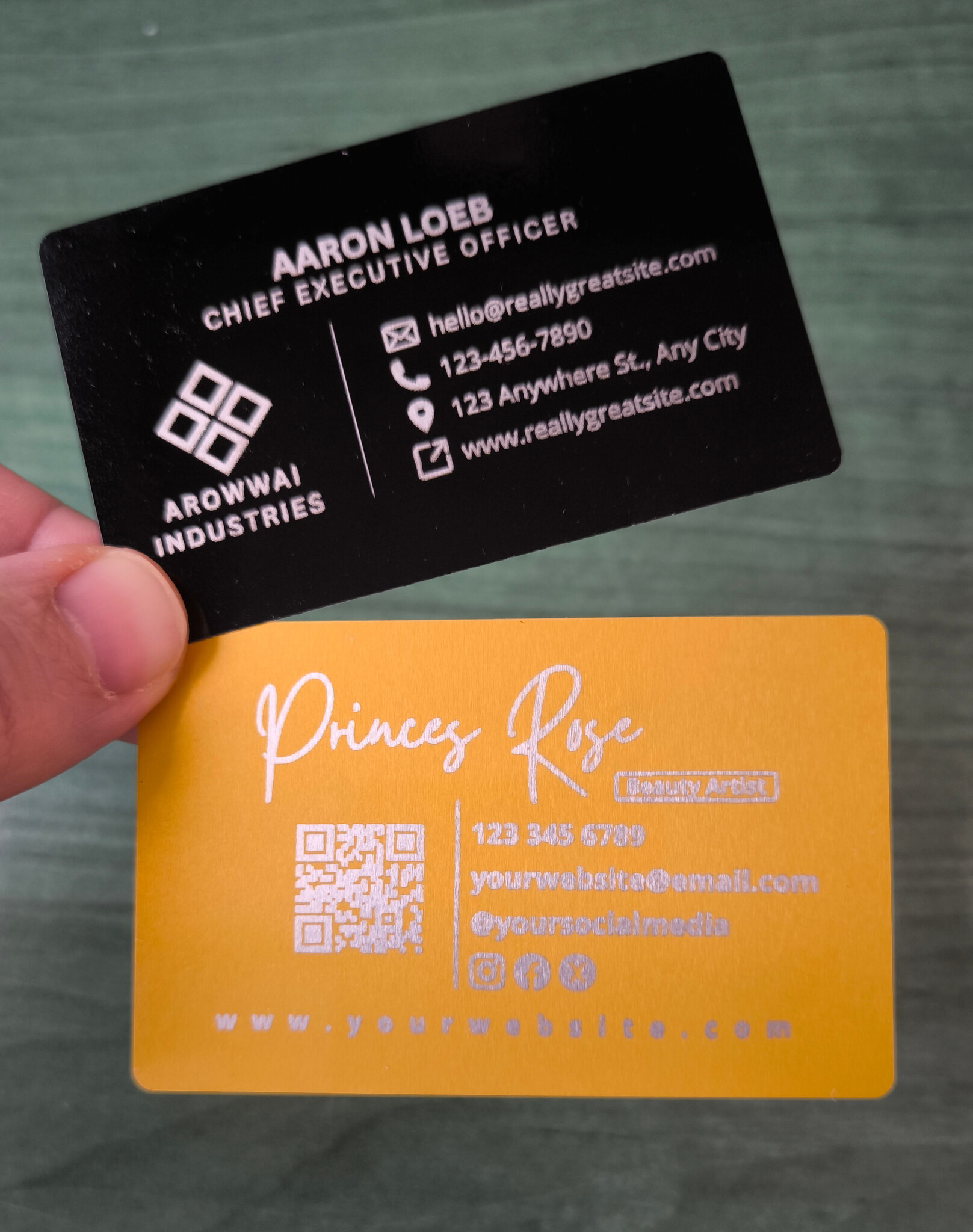
Metal business cards make a strong first impression. People notice the weight and finish. That helps in rooms where many cards look the same. Why metal can convert well
Memorability: people recall the meeting because the card stands out.
Trust cues: the card feels durable and deliberate.
Longevity: metal survives wallets, bags, and desks.
Where metal can reduce conversions
You hand out fewer cards. If each card costs more, you may share less.
Details can be harder to read with some finishes or lighting.
It can feel mismatched for some roles (community work, budget services, casual brands).
Best practice for metal
Keep the printed info minimal.
Add a QR code that goes to one clear action (book, call, quote).
If you want the “tap” flow, use metal NFC (a metal card can include an NFC inlay). That turns it into a smart card.
PVC business cards: flexible, durable, and built for volume
Pvc business cards (plastic cards) work well when you meet lots of people. They hold up better than paper and cost less than metal. Why PVC can convert well
Scale: you share more cards, which increases total chances.
Design options: color, transparency, and finishes can support your branding.
Durability: the card stays usable longer than paper in many cases.
Where PVC can reduce conversions
Lower “stop and look” effect in high-end settings.
It can feel generic if the design looks like a standard template.
Best practice for PVC
Use PVC when volume matters, then upgrade the “next step”:
Print a QR code card layout (large QR, short label like “Save my contact”).
Or use Nfc cards made from PVC to enable tap-to-share.
Wood business cards: tactile, personal, and niche
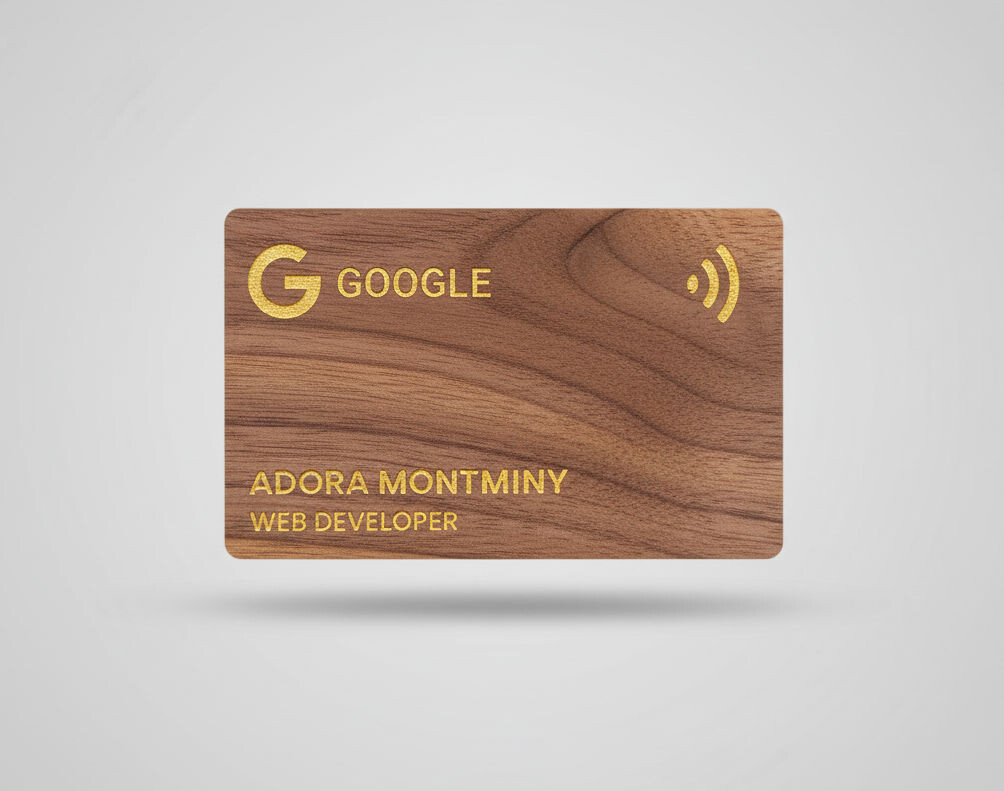
Wood business cards get attention in a different way. They feel handmade and personal. They can also signal craft, nature, and care. Why wood can convert well
Strong brand fit for makers, designers, builders, coffee, wellness, outdoor brands.
Conversation starter: it gives you a reason to talk for 10 more seconds.
Keepsake value: some people keep them because they feel unique.
Where wood can reduce conversions
Readability and contrast: fine text can get lost.
Wear: edges and print can degrade based on finish.
Thickness: some wallets do not like it.
Best practice for wood
Use bold text and high contrast.
Add a QR code as the primary action.
Consider wood for targeted meetings, not mass events.
NFC business cards: the smart path to digital follow-up
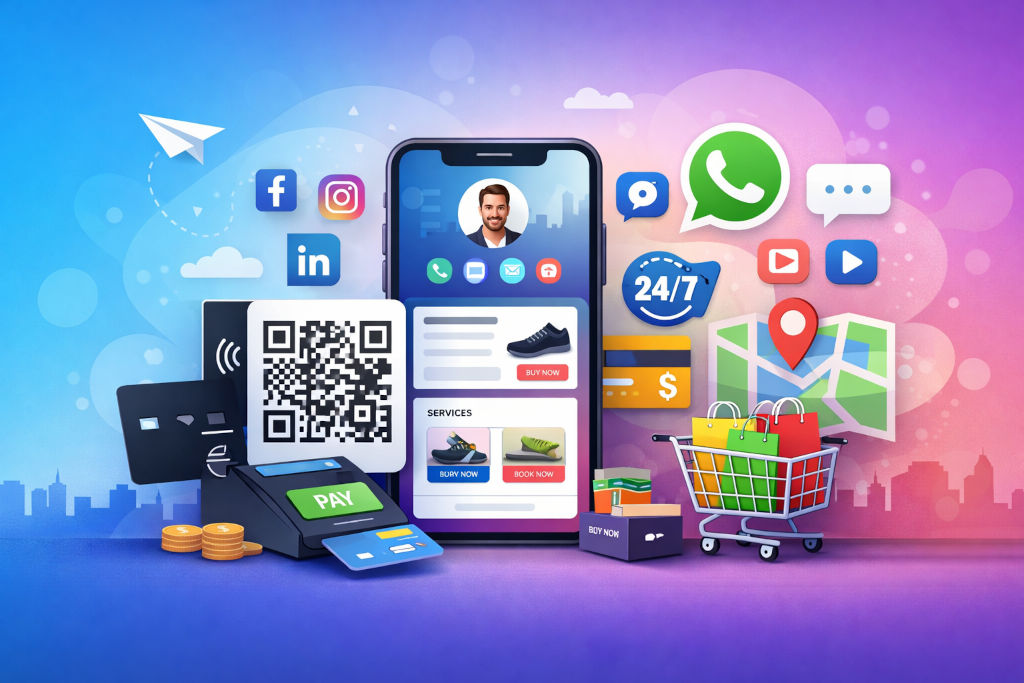
Nfc cards work by letting a phone read a small chip when the person taps the card. The tap opens a link or prompts a contact save. This is why many people call them smart business cards.
Simple explanation
A traditional card asks someone to type your details. An NFC card lets them tap and save.
More detailed explanation
Most NFC business cards send the phone to a URL. That URL can show:
a contact card download (vCard)
your booking link
a lead form
your portfolio
your social links (use care: too many links can hurt focus)
Why NFC can improve conversion
Less effort for the other person
Faster follow-up
Better tracking if you use a tagged link or landing page
The main risk
Not everyone uses NFC. Some people keep it off.
Some phones may not support the same flow.
Fix the risk Use a dual system:
NFC + QR on the same card
This covers tap and scan in one design. It also supports the same “Digital business cards” landing page.
Head-to-head comparison: which one converts better?
“Better” depends on your setting and your goal. Use this table to pick a default.
A useful rule:
If you need more total leads, PVC + QR/NFC tends to win.
If you need fewer leads but higher intent, metal (with QR/NFC) can win.
If you need brand fit and story, wood can win.
Factors that influence conversion beyond material
Material gets attention. Structure gets action. These choices change results more than the substrate.
1) One clear call to action Pick one:
“Save my contact”
“Book a call”
“Get a quote”
“View my work”
Do not list five actions.
2) A landing page that matches the card If you use digital business cards or a link page:
Put the CTA at the top
Keep it fast on mobile
Add one proof point (testimonial, client list, case study)
3) Branding consistency Match your card to your website:
same logo
same colors
same tone
If the card feels like one brand and the site feels like another, people pause. 4) Personalization If you meet people in a niche, print role-specific cards:
“SaaS Partnerships”
“Wedding Photography”
“Commercial HVAC”
This can lift response because the card matches the context. 5) Follow-up The card does not close the loop. You do.
Send a message within 24 hours
Mention where you met
Offer one next step
How to choose the best business card type for your industry and audience
Use your room, not your preference.
B2B services (consulting, legal, finance, enterprise sales)
Strong options: metal + QR, or NFC + QR on a clean card
Goal: booked meeting, intro, proposal
High-volume networking (real estate events, trade shows, recruiting)
Strong options: PVC business cards with a big QR
Goal: contact save, lead form, quick follow-up
Creative fields (design, photo, architecture, artisan work)
Strong options: wood business cards or distinctive PVC
Goal: portfolio view
Tech and product roles
Strong options: Nfc cards plus a QR backup
Goal: LinkedIn connect, calendar booking, product demo link
A practical hybrid approach Carry two types:
A high-reach card (PVC + QR) for busy events
A high-impact card (metal or wood + QR/NFC) for high-value meetings
Make the first impression count, then make the next step easy
Metal, PVC, and wood can all convert. The best card is the one your audience keeps and can act on in seconds. If you want higher conversions, add a simple digital path through Nfc cards and Qr code cards, then track what people do next.